The Motorists have unleashed ten separate motoring and transport policies.
Let’s get through them then.
The Motorist Party recognises the automobile: car, truck, four wheel drive, bus or motorcycle, as the primary mode of transport as it is the most convenient method for ACT residents.
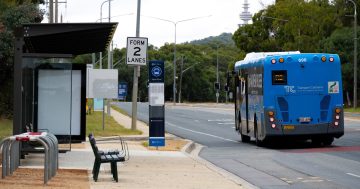
The Motorist Party recognises the need for an effective Transport System to service the Canberra community.
Given that even though over 90% of citizens presently use cars as their transport, we believe that an effective Public Transport System must exist.
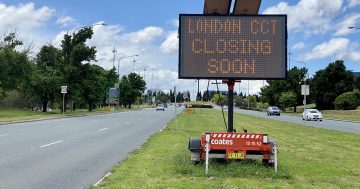
Currently, fixed speed cameras are responsible for raising large amounts of revenue but they only tend to slow motorists down for 50 metres before it is apparent they speed up again, effectively having little or no positive effect on road safety.
The Motorist Party is well aware of things, which are of greatest concern to Canberra motorists and parking is high on their list. The community feels that existing parking spaces are disappearing and that nothing is being created as a replacement, let alone increasing spaces.
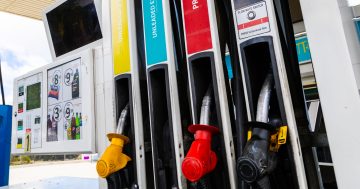
The Motorist Party have concerns regarding the domination of the fuel market in the ACT by Woolworths and Coles operated service stations. Our current situation sees Woolworths and Coles holding around a 70% slice of our local fuel market.Taking into account the lack of competition in our fuel market we would continue to eliminate Woolworths and Coles from bidding on all fuel retail sites sold in the ACT in the future.
Licence holders who lose their licence through disqualification or non-payment of fines will have to undertake a full licence test to regain their licence. The Motorist Party want to enforce the point that if you drive badly enough to lose your licence a revisit of the rules is necessary. This would also help to lower the level of unpaid fines, which is an on-going problem.
It is the goal of the Motorist Party to build a motor sport and driver training centre. It will contain a state of the art driver training facility, which will include driving simulators, skid pan and a road skills driver training area free from other motorists. All drivers being issued L plates would be required to do a short training session and minor car control test before being issued with a learner permit.
The Motorist Party will strongly advocate for the introduction of a restricted registration system for recreational motorcycles, similar to that, which is available in Victoria.
The Motorist Party will work with Government, industry and community groups to promote and enhance the enjoyment and objectives of four wheel drive enthusiasts.
The Motorist Party acknowledges the environmental, social and health benefits of commuter and recreational cycling.
The Motorist Party will support cost effective and sustainable cycling initiatives, which can demonstrate proven benefits to the majority of the ACT community.
The Motorist Party aim to establish the best possible situation for ACT drivers.
– Even though over 90% of Canberrans drive a car, 4WD, truck or bus, people will not stop using the comfort and convenience of their car and change to buses until there is an effective route system and the buses run on time.
– The Motorist Party propose using the latest Information Technology so that the Community, through their mobile phones, can download the bus route systems and frequency and also show when the next bus will arrive in their location.
– The Motorist Party propose that Government buses be free to ride during restricted hours, 5 days a week for a trial period of 6 months.
– The Motorist Party will support the thorough examination of a Mass Transit System, provided that the Community supports it and the Government can afford it.
– Whilst ever cars are Canberrans favoured mode of transport, adequate parking is essential, especially near places of work, shopping centres and housing developments.
– We do not support small housing blocks and skinny streets where parking is a problem along with the difficulties this causes with traffic flow.
– Parking in the Parliamentary Triangle (PT) for Public Servants, Visitors and Tourists must be improved. We will support the building of a multi-level parking complex, outside the PT, supported by a mini-bus service ferrying passengers in and out of the PT.
Truthiness said :
Yup, taxis really are the ideal place for driver-less vehicles to enter the market place. If no one is using the vehicle, then you aren’t wasting money paying a driver doing nothing.
I wonder what the unions think of the idea?
Truthiness said :
I’m pretty sure people will still want their own driverless car. Communism never really took off here.
anything helping getting to and from the pub cheaply, easily, and in comfort might well catch on with the australian public.
johnboy said :
I think the real plus will be being able to sit in the car with a beer in your lap ON THE WAY to the pub… But I imagine the government will probably still want people operating driverless vehicles to be sober, at least initially.
Don’t be so sure.
Governments will see HUGE savings from driverless vehicles once the meatbags stop smashing into each other and needing emergency care and long term disability support.
Also remember that the people working in government like a drink with dinner too and hate arguing over who’s turn it is to drive.
That and the car industry will be mad keen to obsolete the existing fleets.
johnboy said :
Cars built to be entirely driver-less wouldn’t need any of those inconvenient steering wheels, gear changers or peddles either, enabling a much safer cabin space and better air bag placements for when a meatbag operated vehicle hits you.
johnboy said :
Here’s hoping JB, I’ll drink to that
thy_dungeonman said :
No need to read between the lines, just read the full policy statement – their actual policy on cyclists is (paraphrasing): “roads are for cars, cyclists get off the road onto the shared paths that we won’t fund.”
OpenYourMind said :
Only acceptable if they can be set to “Hoon” mode after 11 at night. Don’t think I could sleep without the dulcet tones of circlework being performed nearby.
Of course, the driverless cars would have to be fuelled by alcohol…
…though perhaps more telling than the statement itself is the fact that they have a policy on ‘cyclists,’ not ‘cycling’.
johnboy said :
All the Australian public needs is a tolerant husband. This is a method that meets all those criteria.
Either that or wobbling slowly home on the bike-paths, where the Australian public is only going to hurt itself.
But I suppose the unpartnered, the married-to-one-who-is-also-drinking, or far-flung, might find this difficult. I just find the idea of not being in control of the vehicle (or the driver) quite frightening. Then again, I trust to technology that’s in control all the time: lifts for example. So I suppose I could get used to it.
thy_dungeonman said :
I remember having the same kinds of discussions almost two decades ago when I was banging on about the internet and what it could mean for all of us.
While 2040 sounds a long way off, in planning terms for very large scale projects, it’s not. The 2040 prediction is for 75% saturation, however once driverless cars are available, the speed of change will increase dramatically because the benefits to society are so great. Here’s some of the potential change points:
- Almost no accidents. That alone will be compelling for Governments.
- No requirement for big car parks
- Less traffic control measures. Cars talk to each other (USA is looking to make V2V communications mandatory).
- Less traffic – the main reason for traffic jams is people are crap at driving
- Freedom for disabled and the elderly who can no longer drive
- Removing the public transport costs
- Reducing the costs of transporting goods
- Reducing fuel/electricity usage as cars can be made lighter and in unconventional ways
- Car ownership – many people simply won’t need to own a car any more. They can summon a car (probably by smartphone) for the job at hand – station wagon, ute, single occupant vehicle or whatever.
- Garaging and driveways. Many houses may no longer need a garage and driveway.
If you can’t see how driverless cars aren’t going to change so many facets of how we live, you need a little more imagination.
As for your comment that a driverless car takes up just as much space on the road, the reason this is incorrect has been demonstrated by Volvo driverless tech where cars link together in a close convoy.
DrKoresh said :
Now that is a policy I can wholeheartedly support.
http://www.tested.com/news/44337-how-i-envision-the-future-of-the-autonomous-car/
OpenYourMind said :
I hope the person programming that software does a good job when planning for a f%#&off big jumping under the wheels of the first in the convoy. But I guess vehicle to vehicle comms mean that all the cars stomp the brakes at the same time rather then the old dude at the back not knowing until he sees the brake lights on the car in front.
p1 said :
Your car is already running a bunch of code. If your car is relatively new it’s probably making decisions on which corner to apply brakes (stability control), when to deploy an airbag, when to apply the brakes in an emergency (brake assist), throttle positions, traction control etc.
Get us a SIVS